
Volver a Noticias
Visita a Universidad de Concepción y proyecto Campus Naturaleza
Jul 30, 2025
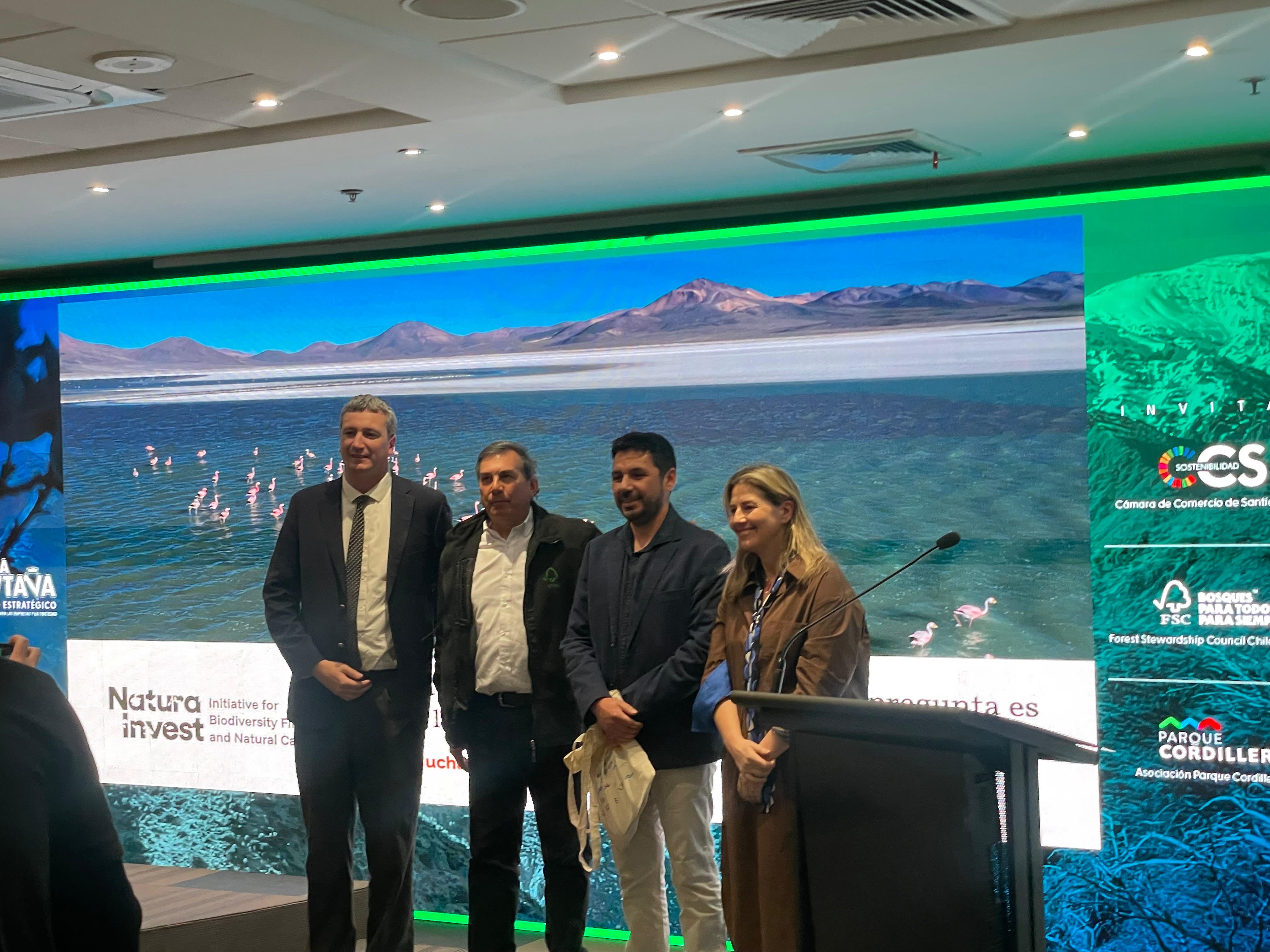
NaturaInvest researcher Francisco Fernández participated in the La Montaña Seminar, where he presented a talk titled “Incorporating Ecosystem Services into Organizational Strategy,” which focused on the importance of integrating nature and natural capital into business decision-making processes.
During his presentation, Fernández highlighted the need to view nature as part of organizations’ productive infrastructure. Ecosystems such as forests, wetlands, soils, and rivers provide essential ecosystem services—including water regulation, pollination, carbon sequestration, and erosion control—that can directly impact variables such as costs, revenue, reputation, access to capital, and operational continuity.
One of the key themes of the presentation was the importance of analyzing the relationship between organizations and nature from a dual perspective: dependencies and impacts. Dependencies refer to what organizations need from nature to operate and sustain their value proposition, while impacts reflect how their activities can alter the quantity, quality, or resilience of natural assets. This perspective provides insight into both the physical risks associated with the degradation of ecosystem services and potential regulatory, legal, and reputational exposures.
The presentation also addressed how changes in natural capital can progressively impact an organization’s financial performance. The degradation of a watershed, the loss of vegetation cover, or a decline in biodiversity, for example, can disrupt ecosystem services, lead to operational disruptions or higher costs, and ultimately affect revenue, margins, insurance, capital costs, or valuation.
Along with the risks, Fernández highlighted the opportunities associated with better management of nature, including strengthening operational resilience, greater efficiency and cost savings, improved access to markets and capital, and the development of nature-based solutions that enable the transformation of conservation, restoration, and land-use management efforts into fundable and scalable projects.
Another key message was that valuing natural capital does not necessarily mean “putting a price on everything.” Depending on the decision at hand, qualitative approaches, biophysical measurements, or monetary valuations may be used. The fundamental criterion is that the information generated be sufficient, credible, and proportionate to the decision it is intended to improve.
In this regard, the main challenge is to move from information to action by incorporating nature into areas such as governance, risk management, investment evaluation, the value chain, and performance metrics. The ultimate goal is for these variables to become part of organizations’ standard decision-making cycle: planning, budgeting, execution, monitoring, and reporting.
The presentation concluded with three main ideas: recognizing ecosystems as strategic assets; ensuring that measurement and valuation have concrete implications for decision-making; and moving from isolated projects toward portfolios of actions that are replicable, fundable, and monitorable. As the presentation summarized, the question is not how much nature is worth in the abstract, but rather what decisions change when that value becomes visible.
At NaturaInvest, we continue to promote the development of tools and knowledge that enable the integration of biodiversity, natural capital, and ecosystem services into the economic and strategic decisions of public and private organizations.
We would like to thank the Asociación Parque Cordillera, the Santiago Chamber of Commerce, and the Forest Stewardship Council Chile for organizing the event.
Invertir en naturaleza, invertir en futuro.
Encuéntranos en
NaturaInvest © 2025 — Chile
Fotografías © Mateo Barrenengoa Lecannelier
Todos los derechos reservados.